🎥 Just watched Project Hail Mary.
Absolutely phenomenal. 👏 Visually, narratively, musically. It is going to hook a certain kind of youth onto the sci-fi genre for life. Plus, I am a sucker for a movie that is so unapologetically life-affirming. Do yourself a favor and see it ASAP if you can!
💐 Mark Hurst from Creative Good:
The next time you’re feeling depressed, here’s what I’d suggest: Find something broken in your home, imbue that broken item with all of your negative emotions, and go get it fixed – at a repair cafe. Repair cafes are community gatherings where volunteers repair the items brought in by guests, for free… The day I visited, there was a palpable energy in the room: alive, positive, and even hopeful…
I love this. Find a repair cafe near you!
🎥 Just watched and enjoyed the new documentary, Marc By Sofia.
In the doc, Sofia Coppola follows and interviews her friend and legendary fashion designer, Marc Jacobs. As far as documentaries go, it’s a tame piece. There is no investigative element, no drama, no tea. As a result, critics have largely accused it of being anodyne. There is some truth in the accusations.
However, I found the documentary very worthwhile. Sofia’s friendship with Marc may not have created the space necessary for the cagey creative to divulge his innermost secrets, but it certainly allowed the man to be himself in his most natural environment: the atelier. Moreover, Sofia’s clout in this world allows her to stand in these spaces without insecurity, which made for a refreshingly ego-loss documentary. It was apparent that the often handheld camera was never steered by a gaze that was intimidated or in awe of the world of luxury fashion. Most importantly, Sofia never steals spotlight from her friend, who himself is winsomely charming when allowed to simply talk. As someone who is inspired by the creative process of fashion designers and intrigued by the interplay between beauty and commerce in the luxury world, it was everything I hoped for (even if it wasn’t life changing). The small tidbits of Marc and Sofia talking film, Broadway, fashion, music, and Liza Minelli brought a smile to my face everytime. New York really does have a way of bringing the right people together.
💬 Have been doing a deep dive into the Fluxus art movement of the 1960’s and am more than a little inspired by the anti-retail shop opened by Robert Filliou and George Brecht, which they named “La Cédille qui Sourit,” or “The cedilla that smiles.”
The thoughtfulness and spirit of the work speaks for itself, but I do adore this tidbit about Filliou, as quoted in JSTOR:
Filliou’s text suggests a fully relational model of subjectivity that, while individual, desires to be fulfilled or made able by connecting to others. It was a model lived by the artist himself, who depended for his survival upon the kindness and generosity of friends, who simply reflected the kindness and generosity of their friend Robert back to him. Well aware that this had become his habitual approach to working and living, he once remarked: The real talent I have is for friendship. Ninety-nine percent of my work is not visible."
This is a vital part of creating what they called a “poetic economy;” a concept that is not going to be leaving me anytime soon. They struggled with the same challenge of being purists versus needing money that many artists struggle with today. What is more important, is that they considered the act of non-creation, failure, and mere ideation, a virtue. They worked hard to not be famous.
When the anti-retail shop inevitably closed, since it was hardly ever open and never really had “inventory”, the artist’s sent out a letter to their friends with the following:
“There is always someone making a fortune, someone going…broke (us in particular)
💐 Things that deserve their flowers:
- Cold brew in cold weather
- Wired headphones
- Art chats
- Hooks to hang belongings in bathroom stalls
- Finding nice furniture on the sidewalk in NYC
- Unexpectedly seeing someone you know on a subway car
- Belly laughter
- People who tell you when there’s something stuck in your teeth
- Drinking fountains with long arcs
- The whimsy of post-it notes
🎵 Been listening to this week:
- Meet Me At Our Spot (Live) by Willow
- The Light by Common
- Summer in the Ends by Juls
- oohshxt! by Samara Cyn
- Sinner by Samara Cyn
Just discovered Samara Cyn, but she is easily one of the most promising MC’s I’ve seen in a while. Her new project drops soon.
💬 RE: My last post about Kimiyo Mishima. A quote too good and near to the themes of my heart not to publish explicitly. When asked about her artistic process:
“I just keep playing. I never think of how to sell my works. I have never had ideas like “I should make a piece for sale.” I just make what I want to make, do whatever I want to, and keep making trouble for people around. I just keep playing all the time.”
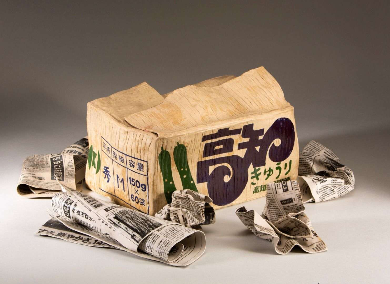
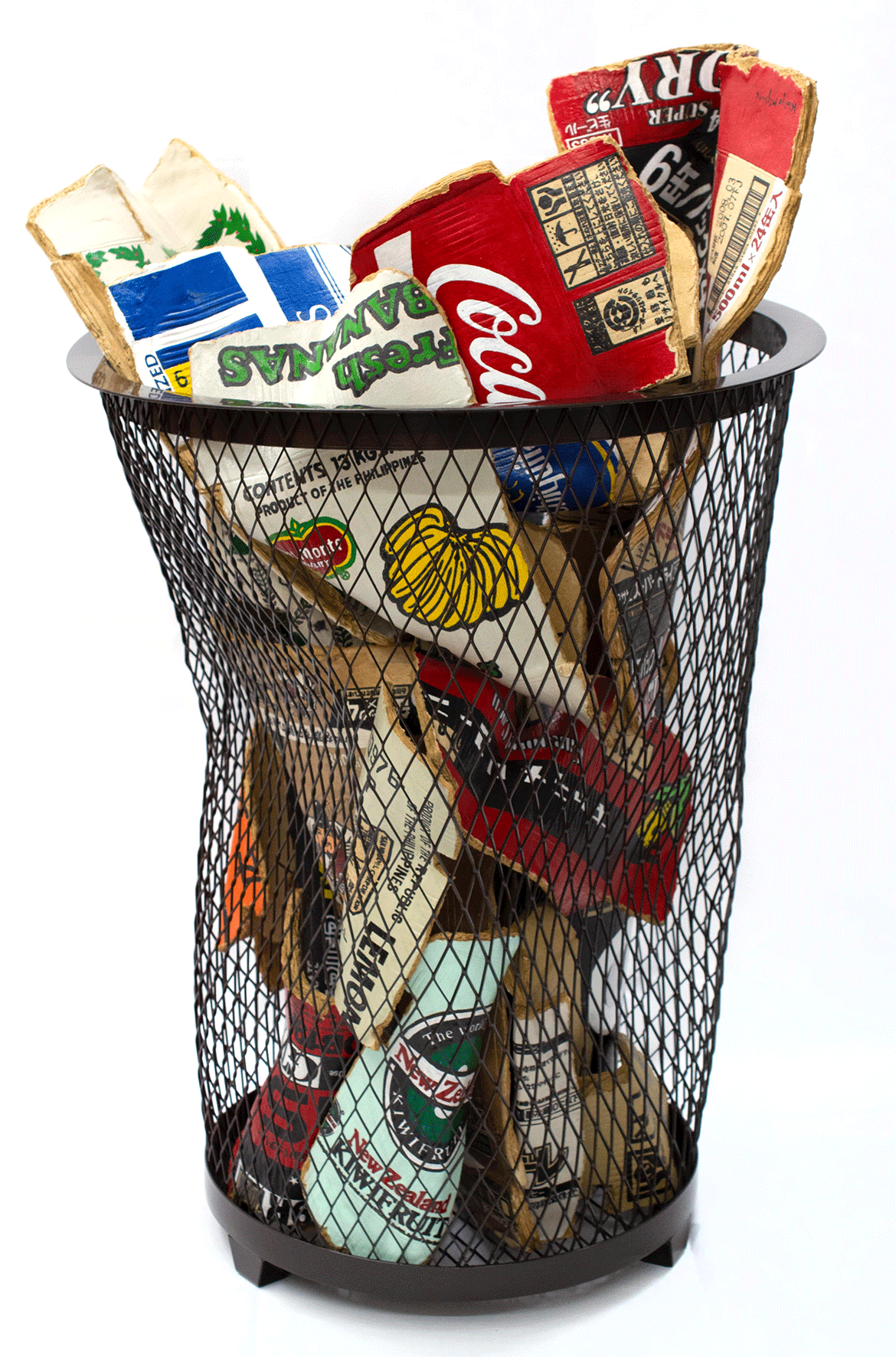
🎨 Recently discovered and can’t stop thinking about Kimiyo Mishima’s amazing ceramic work that replicates printed, cardboard, or breakable material.
Incredible commentary on commodification, overproduction, and the information age. You can also find a simple, insightful interview with her here.
💬 Duchamp’s short essay on The Creative Act (1957) is a good read for people who like to think about art, but also inadvertently gives one of the best arguments for why utilizing AI generation is so detrimental to an artist’s development:
In the creative act, the artist goes from intention to realization through a chain of totally subjective reactions. His struggle toward the realization is a series of efforts, pains, satisfaction, refusals, decisions, which also cannot and must not be fully self-conscious, at least on the esthetic plane. The result of this struggle is a difference between the intention and its realization, a difference which the artist is not aware of. Consequently, in the chain of reactions accompanying the creative act, a link is missing. This gap, representing the inability of the artist to express fully his intention, this difference between what he intended to realize and did realize, is the personal ‘art coefficient’ contained in the work. In other words, the personal ‘art coefficient’ is like an arithmetical relation between the unexpressed but intended and the unintentionally expressed.
🎥 I also watched the horror film Undertone today, and while I normally skip making bad reviews, I’ve been waiting for the opportunity to use this video clip for a while. Pretty much sums it up. 🤣
🎥 Just watched Hamnet in the movie theatres. Deserves a full blog post, but want to get my thoughts off before Oscars. Here are my first thoughts:
Ezra Pound once wrote that “beauty is a brief gasp between two cliches.” Hamnet is a story that braves the perilous path of a very cliched time period, but finds the gasps with a frequency that can only be attributed to great artistry. The triumph of the picture is that it successfully earns the audience’s submersion into the dirty, odorous, and oppressive Elizabethan era. Most notably, and absolutely central to the main theme, is how the people from this time period live in constant proximity to death. Things are always dying—and dying near to us. Modern society is so sanitized and anything that might conjure a memento mori is banished without question. Hamnet, however, let’s the Grim Reaper play the lead and cast his very large shadow over every scene. By doing so, director Chloe Zhao earns the moments that, in my estimation, can only be described as hope-filled magic. The story is ultimately a revolving door—a continual turning over of heartbreak, hope, and heartbreak in rapid succession. If you have ever been touched by grief or healed by goodness, you’ll be familiar with the pattern.
Lastly, all the actors are brilliant (even Joe Alwyn). Paul Mescal has never performed better and the children actors conducted themselves like veterans. Jessie Buckley was on another level though. Her performance was both elegant and transcendent, and deserves to be given its flowers because, for the last 8-10 years, it’s become very popular to make films that somewhat disparage mothers. Thus, it lightened my soul to see such a believable depiction of a wild and free-spirited mother who is somehow bold, independent, intelligent, emotional, and whimsical while still being fiercely loyal, humble, and grounded. Well done.
I may feel differently about this tomorrow, but it is certainly how I feel about it today.
✍️ Back in October, I wrote a dark fiction fable that included a brief rant from an unhinged tech CEO about the connection between war and business. Yesterday morning, Alex Karp of Palantir was on CNBC making the exact same arguments:
On the battlefield, on the commercial battlefield, too, at large companies… our ability to target and take out adversaries and enemies in a way no one else can. I mean, from a not moral perspective, they’re exactly the same; what makes you lethal on the battlefield, and what makes you commercially viable?”
I’m not prescient—this is just how these guys think. They are terribly misguided, even if commercially successful.
💬 From the saintly Simone Weil, in Gravity and Grace:
We have to try to cure our faults by attention and not by will. Attention is bound up with desire. Not with the will but with desire—or more exactly, consent. We liberate energy in ourselves, but it constantly reattaches itself. How are we to liberate it entirely? We have to desire that it should be done in us—to desire it truly—simply to desire it, not to try to accomplish it. Love is the teacher of gods and men, for no one learns without desiring to learn. Truth is sought not because it is truth but because it is good.
🎵 3 songs recommended/shown to me by friends this week:
- Athlete by Spill Tab
- Don’t Huzzle For Love by Apostles
- I’m From The Bay by LaRussel ft Lil Jon (oh yeah)
Just a reminder that both my 2025 and my 2026 listens are public. They are disparate playlists, but you are guaranteed a few gems.
🎥 The Oscars are this weekend, so wanted to repost my predictions. I feel so-so about them, but no changing up now!
I will say that I was never crazy about Marty Supreme and even it’s best qualities have lessened in my mind since I first watched. I have yet to see Hamnet. OBAA is still my fav.
🎮 I am not much of a gamer, and I don’t typically enjoy jokes that are at other people’s expense. But… the game trailer for Karen, a self-described “3D action beat-em-up sandbox game where players will embody a disgruntled Karen who’s been denied service to her satisfaction” was so, so funny to me.
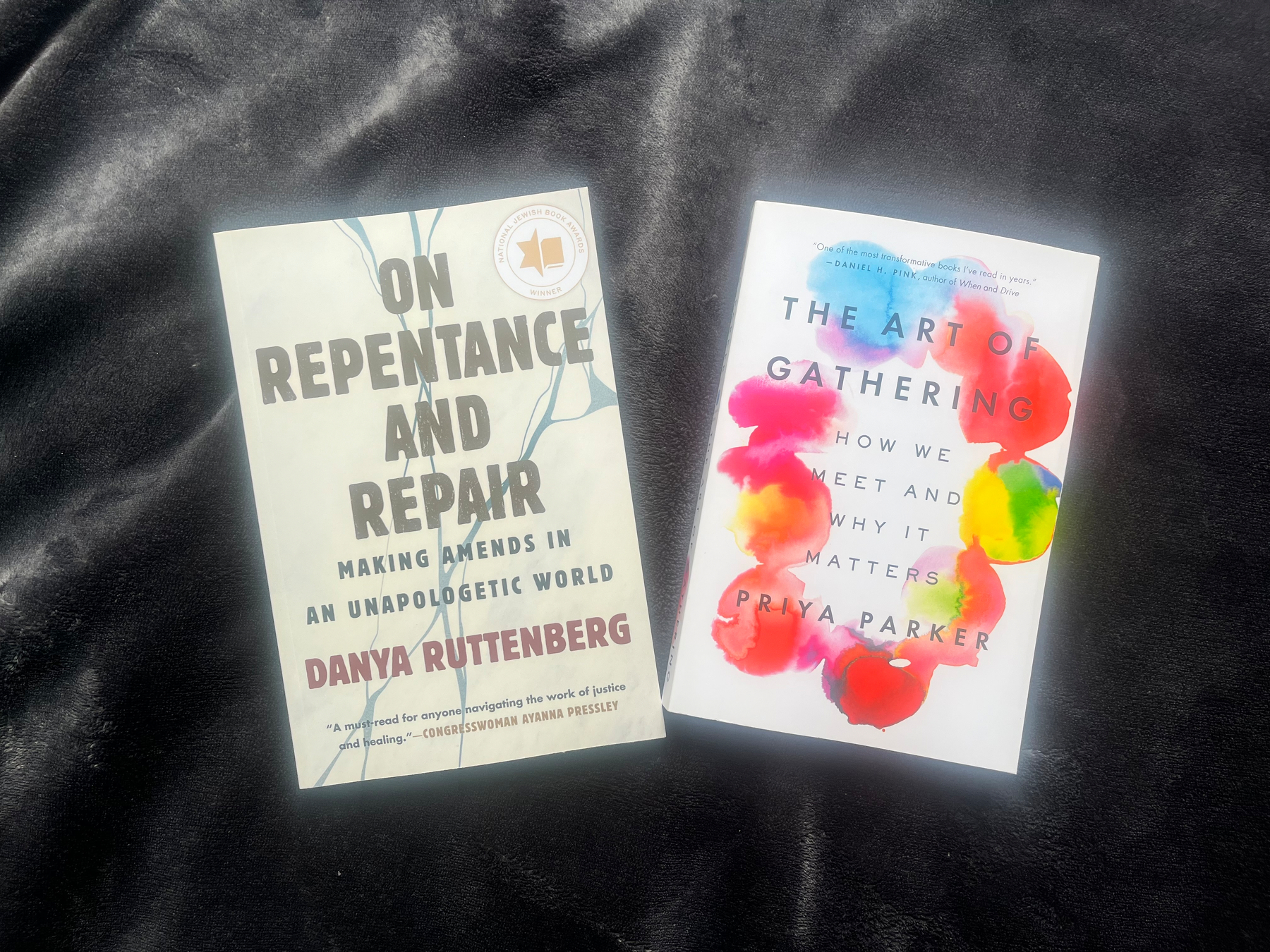
📚 These books are next in my reading queue. From Books Are Magic in BK Heights, as usual.
I confess that both titles come from an interview Ezra Klein did with Priya Parker. I’m normally chary about these types of recs, but I was so impressed with Priya that I decided to take a risk on it.
🎵 Been listening to this week:
- Set Adrift by PM Dawn
- KID AGAIN by Jon Bellion
- If You’re Free by 070 Shake
- B.R.A. Lost Control (J Cole Diss) by CyHi
There was a bonus track on the Baby Keem CD called “Tubi” that I wanted to share, but it doesn’t exist online. I had a link, then it got taken down… Sorry 🤷♂️ That’s the benefit of physical media though. Buy your music! Don’t rent!
✍️ I can smell your aura, a new blog post from yours truly is out now.
As far as I can tell, these are sense-words; adjectives meant to describe an effect that we feel but can’t necessarily link to a specific visual trait. It’s like supercalifragilisticexpealidocious, but for attentional faculties. It’s what we say when we don’t know what to say.
I pull on everything from Ivan Illich to Frank Sinatra to Gandalf to explain pop culture’s misunderstanding of “aura.” These thoughts are half-baked, but hopefully teach something about language, media ecology, and perception.
