
✍️ Writing
✍️ Three Scenes in Hibino Brooklyn: bradley-andrews.com
🗞️ The latest dispatch from Mercury’s Playbook, my business/tech newsletter, is out now: mercurysplaybook.com
For this essay, I discuss the trend taking place in modern markets toward “winner-takes-all” conditions, why some AI superstars are being paid pro athlete money, and much more.
Walk Without Rhythm
🪱 Re: my last post.
The quality that adorns all great literature is an eternal and irrevocable sense of freshness.* Any individual, of any age, in any time of history, will approach the text and receive something of value, assuming that they approach the text in humility and goodwill. George Herbert’s Dune is a premier example. The sheer imaginative energy of the books are enough to permanently alter the inner life of most children; and any adult with eyes to see will find gems that more than repay the price of reading.
Among Herbert’s many distinct and sterling inventions is the idea of “a sandwalk”— the signature gait of the nomadic tribe that lives in the arid, inhospitable deserts of the planet Arrakis. It is a walk devoid of rhythm and predictability, since rhythm and predictability invite the fatal attention of Arakkis’ apex predator, the sandworm. The original text which describes the walk is in my first post, which is linked above. You can see a short example of the walk from the 2021 film here.
When David Lynch (rest in peace) made his version of Dune, he summed it up quite tersely—
This line was later included in the song “Weapon of Choice” by Fatboy Slim, which was released along with one of the most engaging, hilarious, and iconic music videos of all time, eventually earning Slim and Spike Jonze a Grammy. If you’re still reading, please stop and watch the video — I promise that Christopher Walkens’ dance moves will not only surprise you (yes it’s him doing most of the dancing), but will also make you smile.
What the music video understands about the sandwalk is precisely the attribute that I believe is most difficult to convey in the film adaptations— that sand walking resembles more of a dance than it does a mode of travel. Although sandwalking shuns the reliable and comforting beats of a controlled meander, it is still movement defined by grace, elegance, and wisdom. The key to sandwalking is assimilation to the desert’s natural impulses. It is knowing the environment, conforming to it, and letting your choices remain congruent with what is already there, soft as sand, rather than dominate with harshness. Throughout the books, the sandworm is a symbol for total chaos, and it eventually swallows up anything that leans too hard into order — anything that can’t learn to entertain a little arrhythmia, a little weirdness, or a little folly.
As I trekked through the snow late last night and playfully did my sand walk, or snow walk, through the white powdered playground, I realized exactly how difficult this is. Not the actual movement, of course, but the surrender of familiar rhythms. It is hard for us to imagine that something which lacks symmetry and predictability can still be beautiful. Walking, running, and even skipping (which I highly recommend adults do every once in a while) have a baseline of repetition that is hard to abandon, even when doing so consciously. But that is, perhaps, one of the many lessons that Herbert was attempting to teach: Unless we avoid the hypnotic trance of history and learn to break the pattern of “how things have always been done”, we will one day be overtaken by the unexpected and insurmountable. That idiosyncrasies are essential to life, not optional.
So when we endure alternative forms of living, allowing ourselves to be creatures who exult in the unexpected and a participant of the world as it is, rather than as we wish it to be, we learn to thrive in otherwise uninhabitable circumstances. We become people capable of eschewing the patterns that confine us, and remain innocent to the assumptions that no longer serve the greater human project. Fatboy Slim understood this, I think, which is why he put it this way:
If you walk without rhythm, huh, you never learn.
Indeed, there are some things I hope I never learn. That’s not ignorance— it’s innocence. And the only remedy is to continue, on occasion, walking without rhythm. Next time you find yourself on a snowy sheet or sandy bank, give it a try. It’ll make more sense then, I promise.
*this is a paraphrase of one of Ezra Pound’s idea
✍️ I don’t mean to sound haughty, but I think I just wrote the best breakdown of Peter Gabriel’s “And Through The Wire” you’ve ever read. Available now at bradley-andrews.com
(P.S. - it’s altogether possible that this is the only breakdown existing on the internet)
✍️ Still crafting some New Years Resolutions for 2026? How about you steal some of W.H. Auden’s timeless principles instead? Click the link to read my brief commentary on one of my favorite poems, Under Which Lyre: bradley-andrews.com
✍️ From a quick blog post of mine called Patience Is (Still) A Virtue:
I am convinced that humans are meant to live in reality, not fiction, and all spiritual health is predicated on the condition that we be faithful to the world as it is rather than as we wish it to be. An ounce of delusion costs a gallon of resilience—and rejecting what we know to be true will always be experienced by our spirit as a defeat.
Would love to know your thoughts!
📃 I have finally released my “Best Media of 2025” List! Read it now // bradley-andrews.com
✍️ An original poem I needed to get out of my head (I am not a poet) // Read it here: bradley-andrews.com
✍️ Click here to read some of my thoughts on the new NBER paper regarding collusion and common leadership in Silicon Valley:
As an MBA student, the NBER paper reinforces something that I have discovered again and again; while capitalism will always be a very imperfect system, it’s best possible form is when it conforms closest to a game. Meaning, when it is allowed to be playful, highly competitive, and free from both arbitrary rules and bullies. I’ve said it before, but I will say it again: being pro-business requires that one also be anti-monopolist.
✍️ Seven Minute Drill #2: bradley-andrews.com
🎵 My Thoughts On Dijon’s Album “Baby”: bradley-andrews.com
(Hint: I love it)
📚 Book Review: PLAYFUL by Cas Holman // bradley-andrews.com
I am an unwavering advocate of Cas Holman and her life project. Was grateful to get and read this book.
📚 Book Review: Without Feathers by Woody Allen // bradley-andrews.com
✍️ A Brief Note On Spotify Economics and The Cessation of the Penny: bradley-andrews.com
🗞️ I just posted my first ever short story: A Grimm Night on Central Park South. In honor of Halloween, I center it around the spookiest thing imaginable: Big Tech. I would love if you checked out this little piece of dark fiction and gave feedback. Please read and tell me what you think! 🎃🐺🏙️👻
✍️ Streamers Are Clowns: bradley-andrews.com
🗞️ 5 Easy Rules to Understand Technology. My latest newsletter is out now. I draw heavily from Melvin Kranzberg’s Six Laws of Technology, which I believe should be mandatory reading for all technologists and media ecology heads.
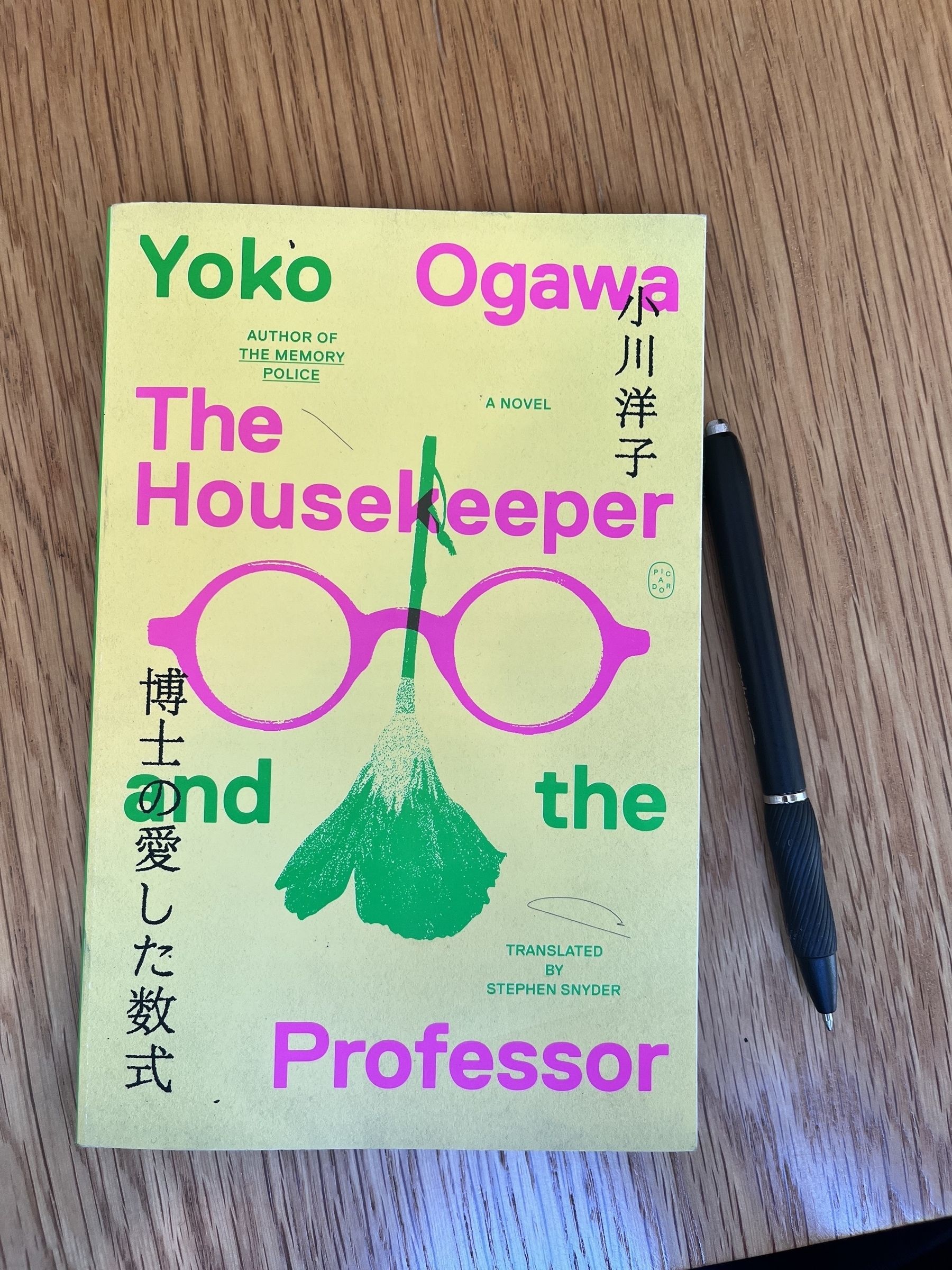
✍️ Third spaces are alive and well. A kind stranger in a coffee shop gave me this book to read last weekend. Read the full story here: bradley-andrews.com/2025/10/0…
🗞️ My new post “Long Live Everything” is out now:
It’s not the quality of a creative act that people necessarily respond to—it is the freedom that is represented in the act. The bendings of our culture lean so heavily toward criticism, consumption, and conformity that even the smallest hint of the alternative constitutes a mini-revolution. People who slant away from the well-worn paths tend to inspire others without even being conscious of it. When someone begins doing what they want—as opposed to just doing what they’re told—it gives courage for others to do the same.